

Announcing SCI's Cover Crop Outcomes Model
Better regenerative agriculture decisions begin with the farmer’s goals, become more useful when farm knowledge is structured thoughtfully, and can then support increasingly focused decisions — from choosing a practice, to prioritizing fields, to evaluating an entire production system.
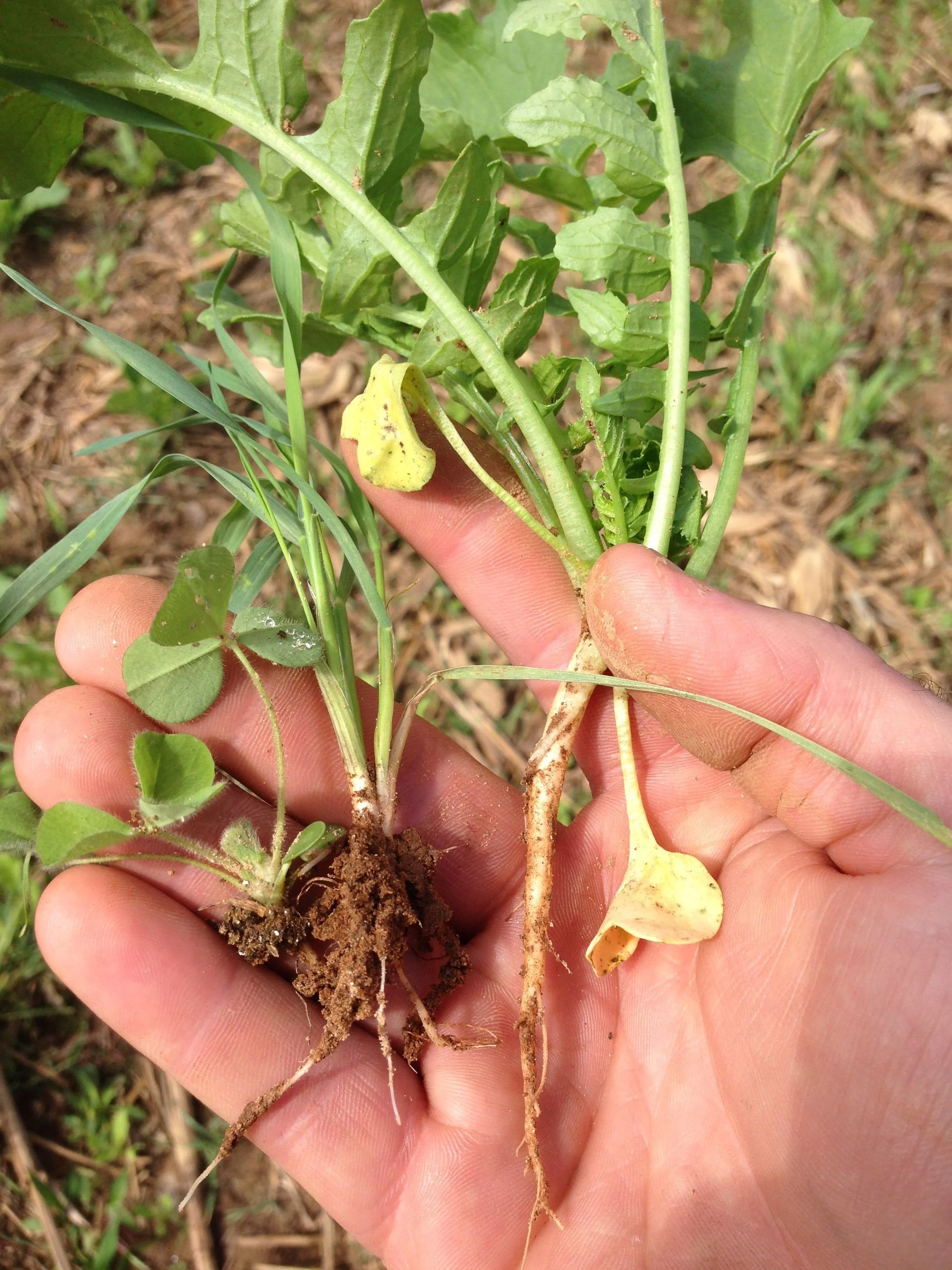
Cover crops have become one of the most widely discussed practices in modern agriculture. They are promoted for their potential to reduce erosion, improve soil structure, suppress weeds, support nutrient cycling, and keep living roots in the soil between cash crops. With so many potential benefits, it's easy to understand why they continue to attract interest from farmers across a wide range of cropping systems.
In working with hundreds of farmers, our Soil & Climate Initiative (SCI) team has found that cover crop conversations are most productive when they begin with the outcome a farmer needs and the constraints they are working within.
But for many producers, the question isn't whether cover crops can provide benefits.
The question is whether those benefits are likely to matter on their farm.
Every management decision requires an investment of time, money, and attention. Cover crops are no different. Before purchasing seed, adjusting planting schedules, or changing management practices, producers want to know whether the practice addresses a real challenge within their operation and whether the potential return justifies the effort.
That is often where the conversation becomes more complicated.
To help farmers make sense of these possibilities, SCI developed the Cover Crop Outcomes Model as a way to explore which outcomes may be most relevant to their goals and growing conditions.
Begin With the Farm’s Goals
Cover crops are frequently discussed as though they are a single practice, even though they represent a diverse group of species with different characteristics and management requirements.
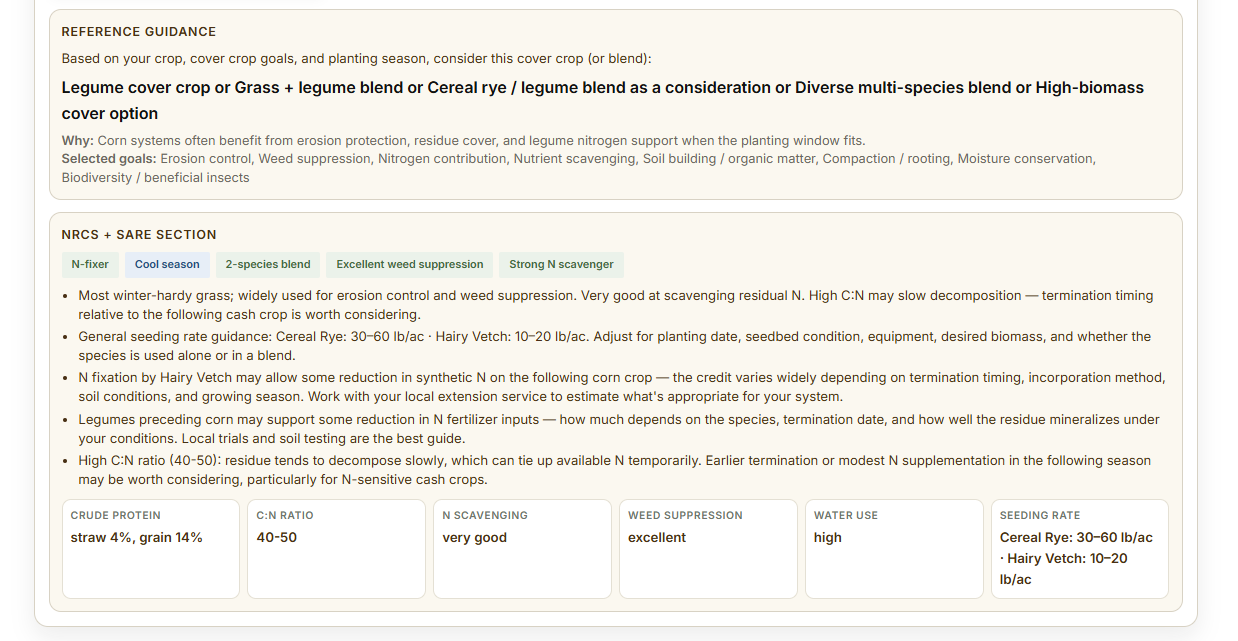
Cereal rye planted to increase biomass and suppress weeds serves a different purpose than a legume planted to contribute nitrogen. A brassica selected for deep rooting and nutrient scavenging brings another set of strengths and considerations.
Choosing among these options becomes easier once a farmer has identified the problem they want to address.
A farmer concerned about erosion may focus on maintaining soil cover during vulnerable periods of the year. Another producer may be looking for ways to suppress winter annual weeds and reduce reliance on additional herbicide applications. Others may be interested in nutrient retention, improved infiltration, increased biological activity, or building organic matter over time.
Although they are all considering cover crops, they are pursuing different outcomes. This matters because the most appropriate species, management strategy, and expectations may differ significantly from one operation to another.
This is one reason broad recommendations about cover crops can sometimes fall short. General statements like "cover crops improve soil health" are not necessarily wrong, but they often fail to answer the questions that farmers are actually asking. Farmers have to evaluate potential impacts alongside costs, equipment requirements, labor availability, planting windows, termination plans, and the realities of their existing crop rotation.
The value of the practice depends on how well it fits the farm’s goals and management realities.
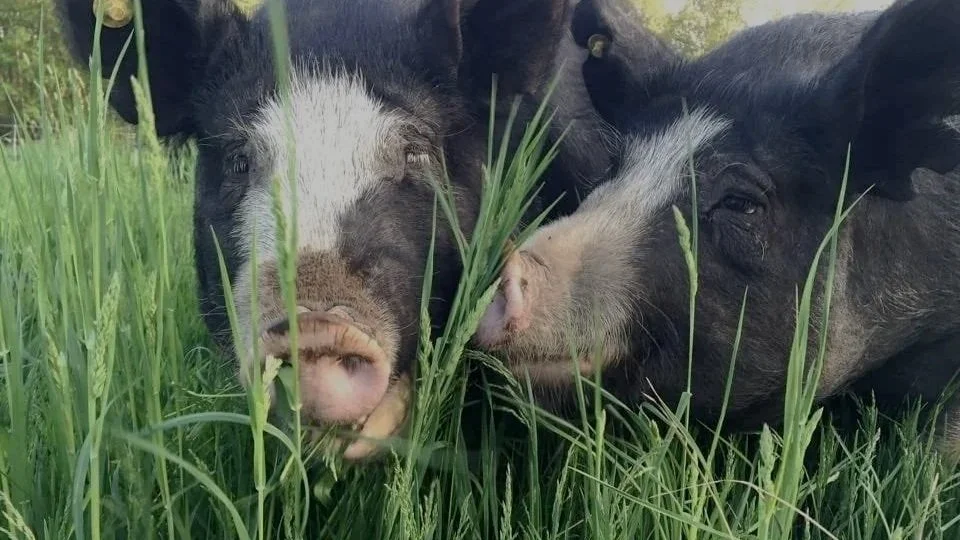
General statements like "cover crops improve soil health" are not necessarily wrong, but they often fail to answer the questions farmers are actually asking.
Using Research to Compare Options
Decades of field studies have helped identify patterns in how cover crops influence soil health and productivity indicators under different conditions. While no study can predict exactly what will happen in an individual field, research can help establish reasonable expectations and provide insight into which outcomes are most commonly observed.
That information becomes especially valuable when comparing potential cover crop strategies.
A farmer interested in nitrogen cycling may focus on species with nitrogen-fixing capabilities. A grower dealing with significant weed pressure may prioritize biomass production and residue cover. Someone concerned about water movement may be more interested in infiltration, runoff reduction, or erosion control.
Each objective points toward different management considerations and potentially different cover crop choices.
Rather than searching for a universally "best" cover crop, farmers are typically better served by identifying the functions they want the practice to perform and then evaluating which species or mixtures are most likely to deliver those functions.
Turning Research Into a Planning Resource
This is the idea behind SCI's Cover Crop Outcomes Model.
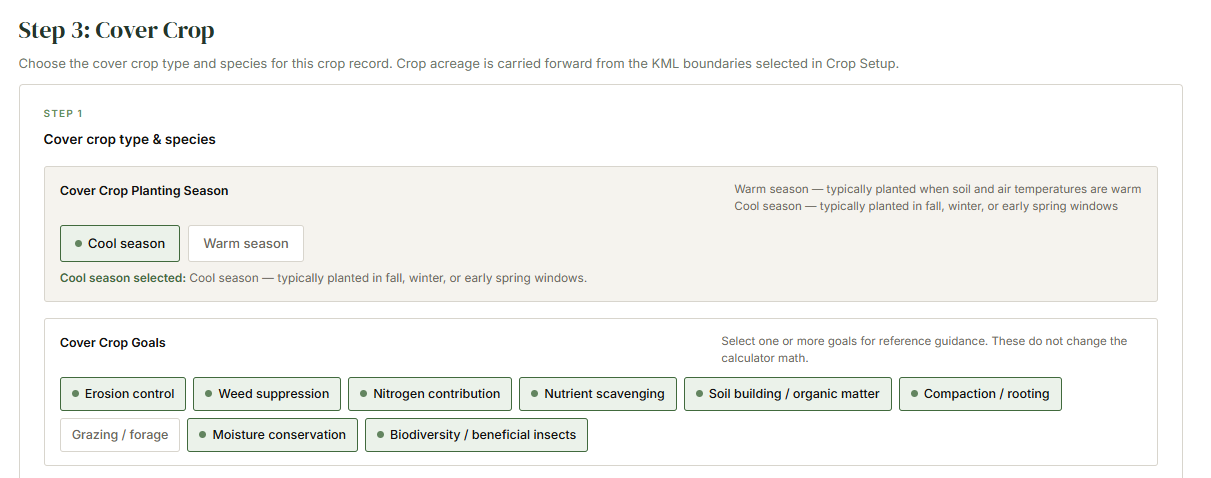
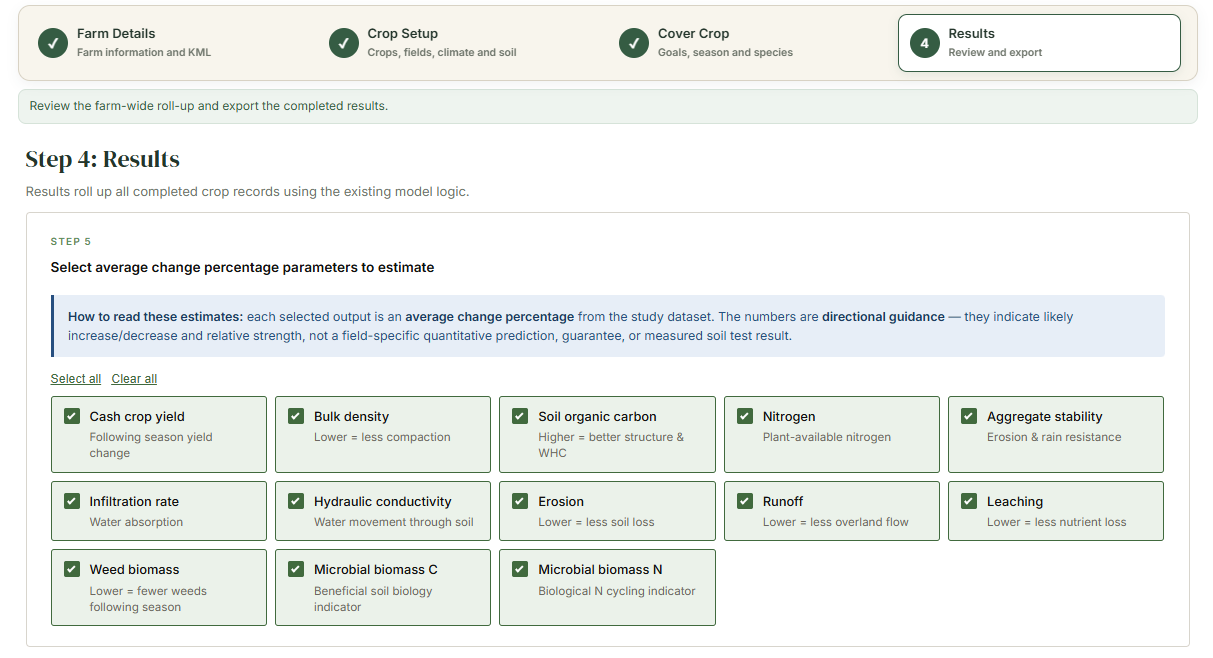
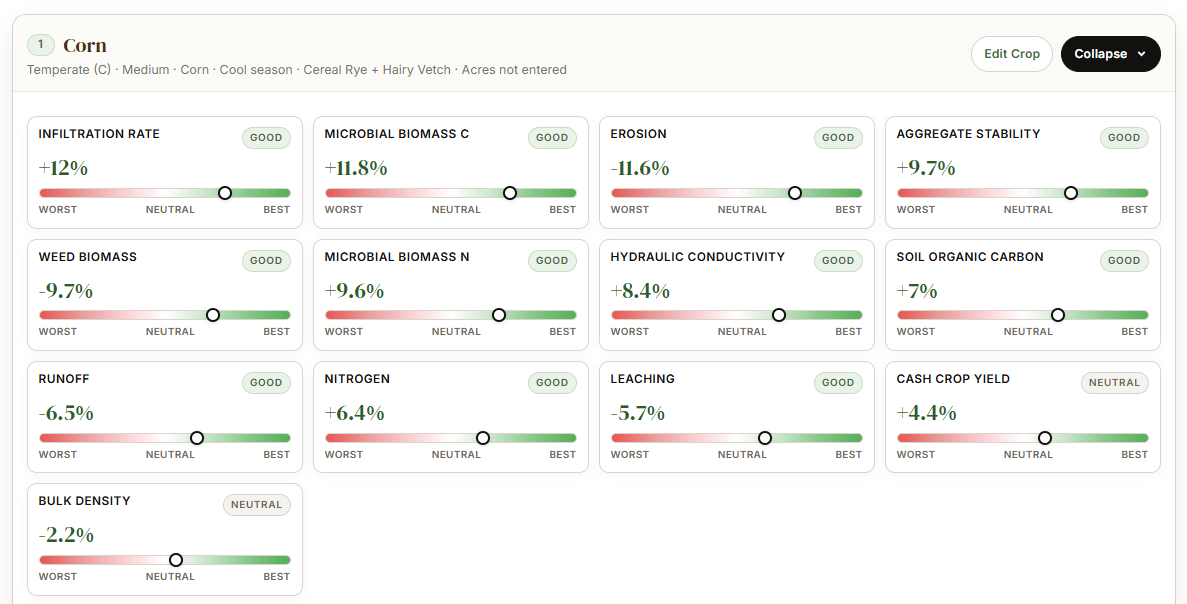
The tool was developed to help translate research into a more practical planning resource. By considering factors such as soil texture, climate, cash crop, planting season, cover crop type, and management goals, it provides directional insights into how different cover crop options may influence a range of soil health and productivity indicators.
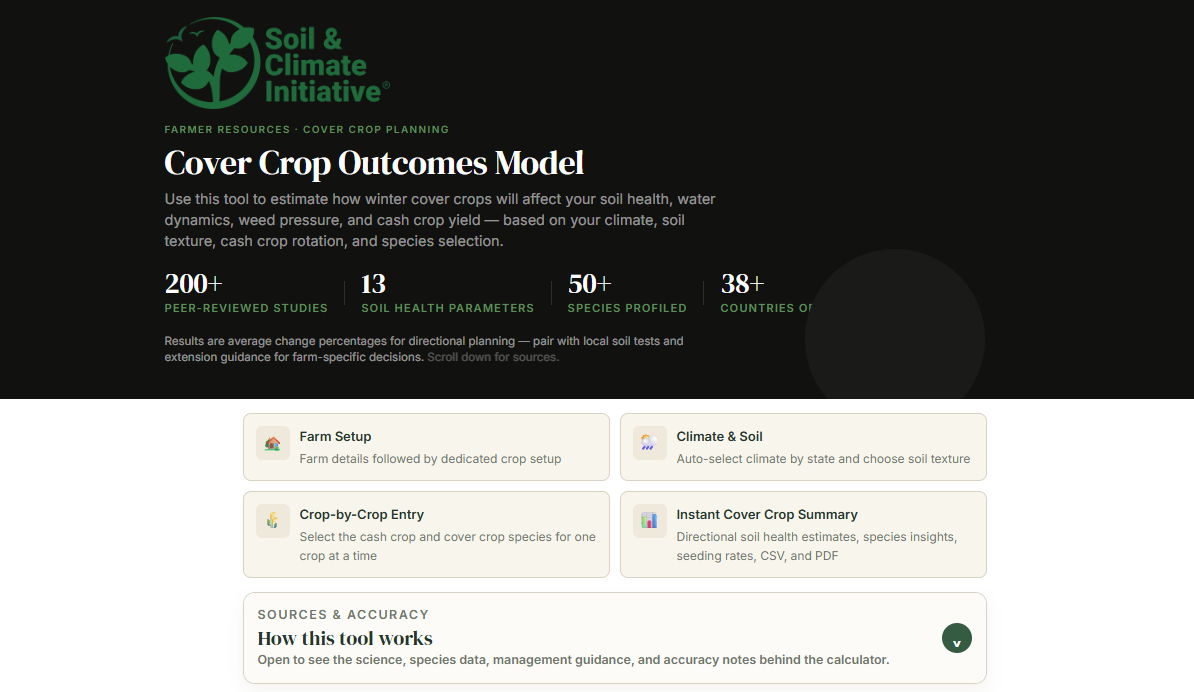
SCI's Cover Crop Outcomes Model is grounded in an extensive body of peer-reviewed research, including a meta-analysis of approximately 280 published field studies spanning more than 38 countries, combined with USDA-ARS species-level agronomic data and USDA-SARE management research. The model integrates these scientific findings to estimate how cover crop selection, climate, soil texture, and management practices influence soil health, water dynamics, weed pressure, and crop productivity, providing research-based guidance for agricultural decision-making.
Importantly, this tool is not intended to predict field-specific outcomes. Agriculture is influenced by countless variables, including weather, management decisions, field history, establishment success, and seasonal conditions. No calculator can account for all of those factors.
Instead, the goal is to help producers compare options, identify potential opportunities, and develop realistic expectations before implementing a practice. This can be especially helpful early in the decision-making process, when a farmer is still considering whether a cover crop fits the operation and which functions should receive the most attention.
For many farms, that may be the most valuable role a decision-support tool can play.
If you’re interested in learning more about our Cover Crop Outcomes Model or exploring how it could support your farm or program, reach out to our team and we’ll be happy to walk you through it.
Bringing Farmer Experience Into Decisions
The decision to adopt a new management practice rarely comes down to a single number or recommendation. Farmers want enough information to make informed decisions, reduce uncertainty, and improve the likelihood of success.
In that sense, cover crops are not fundamentally different from any other management decision. Success depends on matching the right practice to the right objective, understanding the tradeoffs involved, and evaluating results over time.
Before choosing a cover crop, consider the question: What am I trying to accomplish, and which cover crop is most likely to help me get there?
Let’s connect.
SCI works with people across the agricultural system to make cover-crop decisions more practical and better informed.
➜ For farmers, we can help compare cover-crop options, clarify the outcomes you are working toward, and connect you with peer mentors who have experience in similar regions and cropping systems.
➜ For brands, we can help shape transition programs around farmers’ goals, local conditions, and the support needed for successful adoption.
➜ For funders, we can help identify where research, decision-making tools, technical assistance, and farmer-to-farmer learning can strengthen cover-crop initiatives.
If you are considering cover crops or developing a program to support their adoption, let's connect!